From senior living to hospice, Brightmoor helps individuals and families find the right level of support for what comes next.

Explore Brightmoor’s hospice, nursing, palliative care, and senior living services to find the support that’s right for you or someone you love.

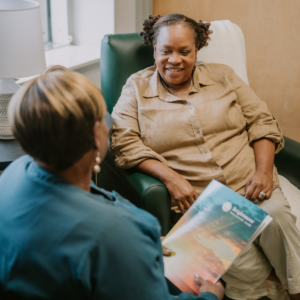


Brightmoor brings nursing, palliative care, hospice, and senior living together within one family of care. With multiple services connected under one organization, individuals and families can find the support they need now while having access to additional care as their needs change.
Share what you or your loved one needs, what has changed, and any concerns you have.
Our team can help determine which Brightmoor services may be the best fit for your situation.
We’ll answer your questions and explain what to expect so you can make an informed decision.
Once you’re ready, we’ll help you understand the next steps for getting started with the appropriate Brightmoor team.
Across every Brightmoor setting and service, our focus is on creating an experience families can feel confident in and individuals can feel comfortable with.




Our family was so grateful that The Brightmoor Hospice was recommended to us by Piedmont Newnan Hospital when it was clear that our 93 year old mother neared the end of her like. Their staff was compassionate and gentle as they guided us through this difficult and unfamiliar time. We were in their hospice facility in Griffin only three days before Mom passed but that was enough for us to know that we would recommend Brightmoor without reservation as navigator through the dying process.
Brightmoor Nursing Center has been a blessing to mom, my sister and I. Mom wasn’t getting better after multiple hospitalization and unfortunately we couldn’t provide the care she needs at home. Enter Brightmoor Nursing Center. They love her and she has blossomed there. She has friends, activities, and loves picking with the staff. There are some truly amazing staff that care. From the environmental services to the administration they care. I truly believe we would have buried mama this year if she wasn’t in the nursing center. I will never be able to say THANK YOU enough.
Never has my mother had such great care! I am amazed at how this staff anticipated her needs. So happy Brightmoor was recommended to us by 3 other families who have had this same experience. Thank you Brightmoor!!!
I’ve had a truly positive experience with this nursing home, and I’m very grateful for the level of care provided. From the moment we arrived, the staff made us feel welcome and reassured during what can be a very emotional time. I would highly recommend this facility to anyone whose looking for their loved ones a place to call home.
Brightmoor Assisted living has a very caring staff and treated us like family. My dad didn’t want to leave his house but after literally 24 hours said he loved it there and don’t know why he couldn’t have gone earlier. Most of the times you don’t realize how much your parents need interaction with others you think leaning them at their house is best but it’s not.
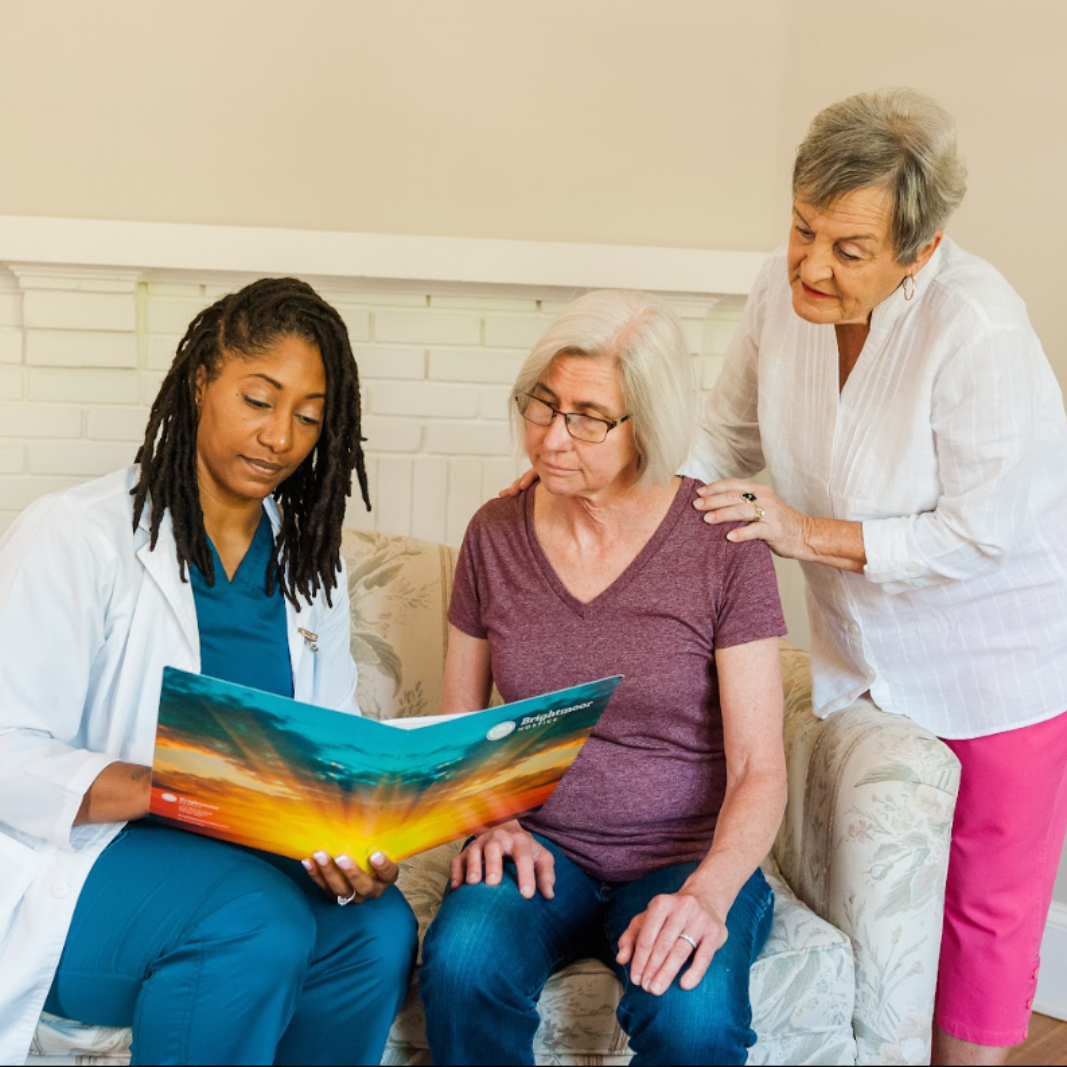
Brightmoor offers a continuum of care: skilled nursing and rehabilitation, palliative care, hospice care, and senior living. Each serves different needs, from recovery and long-term support to serious illness, end-of-life care, and residential living.
The right option depends on your or your loved one’s health, living situation, and current needs. Our team can help you understand the differences between Brightmoor’s services and determine the best place to start.
Brightmoor services such as palliative and hospice can be provided wherever a patient calls home, while others are offered within Brightmoor communities and care facilities.
Coverage varies by service, insurance plan, and individual eligibility. Our team can help you understand coverage and payment options for the Brightmoor service you are considering.
Contact our team and tell us a little about what you or your loved one needs. We can answer questions, explain available options, and help you determine the appropriate next step.
Explore helpful articles, practical advice, and resources covering nursing care, rehabilitation, hospice, senior living, and more.
Explore helpful articles, practical advice, and resources covering nursing care, rehabilitation, hospice, senior living, and more.
Tell us a little about what you’re looking for, and a member of the Brightmoor team can help you understand your options.

Learn how different illnesses may affect care needs and when hospice support may be appropriate.
Hospice may be appropriate for individuals with a life-limiting illness and a life expectancy of six months or less if the illness follows its expected course. Eligibility is determined through a clinical evaluation.
Select a condition below to learn more.
As ALS progresses, breathing, swallowing, and moving may become more difficult. Hospice can help manage discomfort and support patients and families as care needs increase.
In the advanced stages of dementia, your loved one may need help with nearly every part of daily life. Difficulty communicating, trouble swallowing, weight loss, and repeated infections may be reasons to ask about hospice.
When cancer advances and treatment is no longer helping, or a person chooses to focus on comfort, hospice may offer an added layer of support. Care focuses on managing pain and other symptoms while supporting emotional and practical needs.
When breathing becomes difficult even while resting or doing simple activities, daily life can feel overwhelming. Hospice can help ease symptoms and provide reassurance for patients and caregivers.
Advanced heart disease can cause shortness of breath, swelling, weakness, and discomfort that make everyday activities harder. Hospice offers support when symptoms persist and care needs continue to grow.
For someone living with advanced HIV or AIDS, repeated infections, weight loss, and increasing weakness may lead to greater care needs. Hospice focuses on comfort and compassionate support for the person and those who care for them.
When kidney disease becomes advanced, patients and families may face difficult decisions about dialysis and ongoing care. Hospice may be an option for those who choose not to begin dialysis or decide to stop, depending on their overall health and needs.
Advanced liver disease may cause fluid buildup, confusion, discomfort, and repeated hospital stays. Hospice can help manage symptoms and support families as the illness progresses.
Conditions such as Parkinson’s disease, multiple sclerosis, or the lasting effects of a severe stroke can affect movement, communication, and swallowing. Hospice may be appropriate when these changes become severe and a person’s overall health continues to decline.
After a severe infection such as sepsis, a person already living with an advanced illness may struggle to recover. When health continues to decline, hospice may help provide comfort and support through the next stage of care.
Having one of these conditions does not automatically qualify someone for hospice. Eligibility is based on each person’s individual health and care needs.
Have questions about hospice eligibility? Our team is here to help you understand your options.